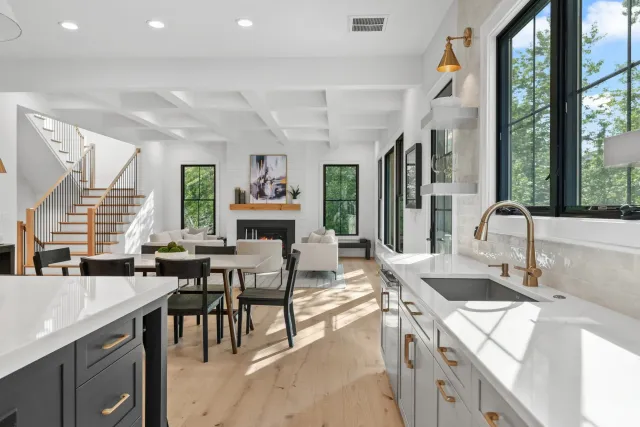
When a buyer finds your listing on Zillow, Realtor.com, or Redfin, they’re immediately surrounded by competing properties. Sidebar suggestions, “similar homes” carousels, and algorithm-driven recommendations all pull attention away from your listing. The platform’s goal is engagement — not selling your specific home.
A single property website changes that entirely. It gives your listing its own URL, its own space, and zero competition for the buyer’s attention.
This is why top-producing agents — the ones who consistently win listings against stiff competition — use property websites as a standard part of their marketing toolkit. Not because it’s flashy, but because it works.
What Is a Single Property Website?
A single property website is a dedicated webpage built for one listing. It typically includes:
- A branded URL — something like 123MainStreet.com or a clean subdomain
- Full photo gallery — all listing photos in high resolution, not compressed MLS thumbnails
- Embedded video — property walkthrough and drone footage playing natively
- 3D virtual tour — Matterport or similar tour embedded directly in the page
- Floor plans — interactive or static floor plan graphics
- Property details — beds, baths, square footage, lot size, features, and highlights
- Agent branding — your photo, contact info, and brokerage details
- Call-to-action — schedule a showing, request information, or contact the agent
What it doesn’t include: other listings, ads, algorithmic distractions, or anything that pulls the buyer away from this specific property.
Why Property Websites Win Listings
1. They Eliminate Competition
On Zillow, a buyer viewing your $500K colonial is one click away from three other $500K colonials in the same neighborhood. Every listing platform is designed to maximize time-on-site, which means actively showing buyers alternatives to your listing.
A property website removes that entirely. The buyer sees one home. Your home. Every second they spend on the page is spent engaging with your listing.
2. They Impress Sellers in Listing Presentations
This is the secret weapon. When you present a seller with your marketing plan and include “I’ll create a dedicated website for your home,” you’re demonstrating a level of investment and professionalism that most competing agents don’t offer.
Show sellers an example property website from a previous listing. Let them click through the gallery, watch the video, explore the 3D tour — all on a single, branded page. Then ask: “Which agent’s marketing would you rather have working for your home?”
The seller almost always chooses the agent who goes further.
3. They’re the Perfect Link for Everything
A property website URL is the single most versatile marketing asset you can create:
- Social media ads — one clean link in your Facebook, Instagram, or Google ad that leads to all media
- Email campaigns — “View the full listing at [PropertyURL]” is more compelling than a Zillow link
- Print materials — flyers, postcards, and mailers with a QR code linking to the property website
- Text messages — send the link to interested buyers for instant access
- Agent-to-agent sharing — other agents can share the link with their buyer clients
No fumbling with multiple links for photos, video, and tour. One URL. Everything in one place.
4. They Provide Analytics
Most property website platforms include basic analytics:
- How many people visited the page
- How long they spent viewing photos, video, and details
- Which media they engaged with most — did they watch the full video? Open the 3D tour?
- Where traffic came from — social media, email, direct, or search
- Device breakdown — mobile vs. desktop viewing
This data helps you refine your marketing. If 80% of traffic comes from mobile but the video isn’t being watched, you know to optimize for mobile viewing. If the 3D tour gets the most engagement, you know to feature it more prominently in your other marketing.
You can also share these analytics with sellers as proof that your marketing is generating interest. “Your property website has been viewed 347 times this week, with an average viewing time of 4 minutes” is a powerful update.
5. They Work for Every Price Point
Property websites aren’t just for luxury listings. At $13 per listing, they’re cost-effective for any property:
- Starter homes ($200K-$400K): a property website elevates the marketing above what buyers expect at this price point, making the listing stand out
- Mid-range homes ($400K-$800K): the standard expectation in competitive markets. If your competition uses them and you don’t, you’re at a disadvantage
- Luxury homes ($800K+): non-negotiable. Luxury buyers and their agents expect a dedicated digital presence for every listing
What Makes a Great Property Website
Fast Loading
Buyers won’t wait. If the page takes more than 3 seconds to load, they leave. Property websites need to be optimized for speed:
- Compressed images that maintain visual quality
- Lazy loading for photos below the fold
- Efficient video embedding (not auto-playing a 100MB file)
- Mobile-first design that works on cellular connections
Mobile-Optimized
Over 60% of real estate browsing happens on mobile devices. The property website must work flawlessly on phones:
- Swipeable photo gallery
- Video that plays natively in mobile browsers
- Text that’s readable without zooming
- Tap-to-call agent contact button
- 3D tour that opens in mobile-friendly viewer
All Media in One Place
The whole point of a property website is consolidation. Don’t make buyers click external links or navigate to other platforms. Everything should be embedded or accessible on the single page:
- Photos in a gallery viewer (not linking to a separate Flickr or Google Photos album)
- Video playing directly on the page
- 3D tour embedded or opening in an overlay
- Floor plans viewable without downloading a PDF
Clean Design With Clear CTA
The design should serve the property, not distract from it. That means:
- Large, high-quality hero image at the top
- Clean layout with adequate white space
- Property details organized logically (not buried below a wall of text)
- Prominent call-to-action: “Schedule a Showing” or “Contact Agent” visible at all times
- Agent branding that’s professional but doesn’t overshadow the property
How to Maximize Your Property Website’s Impact
Drive Traffic to It
A property website is only valuable if people see it. Actively drive traffic:
- Share the link in every listing email instead of (or alongside) the MLS link
- Use the URL in social media posts — “Explore the full listing: [link]”
- Run targeted Facebook/Instagram ads pointing to the property website, not the MLS listing
- Include a QR code on print materials (yard sign riders, open house flyers, postcards)
- Add the URL to your email signature when the listing is active
Update It as Needed
If you add new media (twilight photos, a new video, updated pricing), update the property website. It should always reflect the most current state of the listing.
Use It in Open House Follow-Ups
After an open house, send attendees a follow-up email with the property website link: “Thank you for visiting [address] today. View all photos, the 3D tour, and the video walkthrough at [link].”
This gives them a distraction-free way to revisit the home and share it with family, friends, or their own agent.
Repurpose After the Sale
After the home sells, the property website becomes portfolio content:
- Update it to “SOLD” status
- Include it in future listing presentations as a marketing example
- Reference it in your portfolio of past sales
- Use the analytics as proof of marketing effectiveness
The Cost vs. Value
| Property Website | Skip It | |
|---|---|---|
| Cost | $13-$50 per listing | $0 |
| Buyer experience | Distraction-free, all media, branded | Competing listings, ads, platform clutter |
| Seller impression | ”My agent goes above and beyond" | "My agent did the basics” |
| Social media ads | One clean URL for all campaigns | Multiple links or MLS redirect |
| Analytics | View count, engagement, traffic sources | None (MLS data is limited) |
| Shareability | Clean URL for text, email, print | Long MLS URL with parameters |
At $13 per listing, the question isn’t whether you can afford a property website. It’s whether you can afford to skip one when the agent competing for your next listing uses them as standard.
Get Started
A property website takes minutes to set up and lasts the entire life of the listing. It works harder for your listing than any other marketing asset at its price point.
Ready to give your next listing its own dedicated online presence? Explore UMedia’s property website service — starting at $13 per listing, with all your media integrated automatically.